

When shopping for a power bank, one of the first things you’ll notice is the capacity listed in milliamp-hours, or mAh. But what exactly does mAh mean, and how does it affect your choice of power bank? Understanding this crucial metric can help you make an informed decision, ensuring you pick a power bank that meets your needs.
What is mAh?
Milliamp-hours (mAh) is a unit of measurement that represents the capacity of a battery, or in simpler terms, how much charge it can store. The higher the mAh rating, the more energy the power bank can hold, and the more times it can recharge your device. For example, a power bank with 10,000 mAh can theoretically charge a smartphone with a 2,500 mAh battery about four times (though real-world factors may reduce this number slightly).
Why Does mAh Matter?
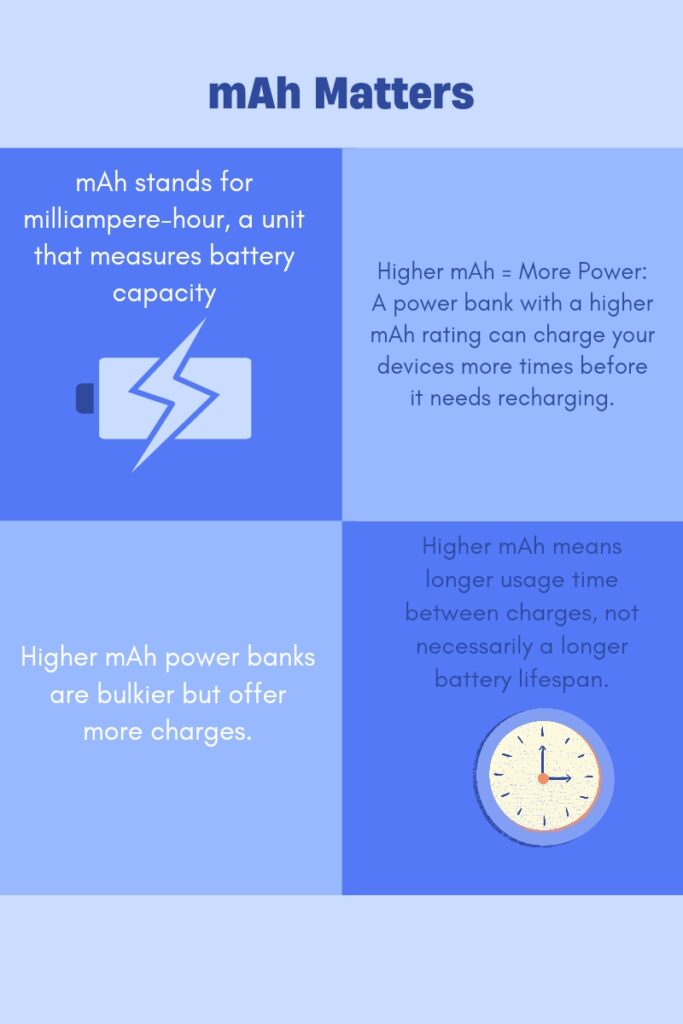
mAh stands for milliamp-hours, a unit that measures the capacity of a battery. It indicates how much charge a power bank can store. If you frequently travel or use multiple devices, a higher capacity power bank will be more beneficial, providing more charges for your gadgets. However, a higher mAh rating often means a larger and heavier power bank, so it’s essential to balance capacity with portability depending on your needs. The higher the mAh, the more power the bank holds, meaning it can charge your devices more times before needing a recharge itself.
Real-World Usage
It’s important to note that the mAh rating alone doesn’t tell the whole story. Efficiency losses, the power bank’s output voltage, and the device’s battery efficiency all play a role in determining how many charges you’ll actually get. For instance, charging a tablet, which requires more power than a smartphone, will deplete a power bank faster, even if the mAh rating is high.
Matching Capacity to Your Needs
When choosing a power bank, consider your usage habits. If you’re looking for something to top up your phone during a night out, a smaller, lighter power bank with around 5,000 mAh might suffice. However, for long trips or heavy device usage, opt for a power bank with at least 10,000 to 20,000 mAh.
Beyond mAh: Other Features to Consider
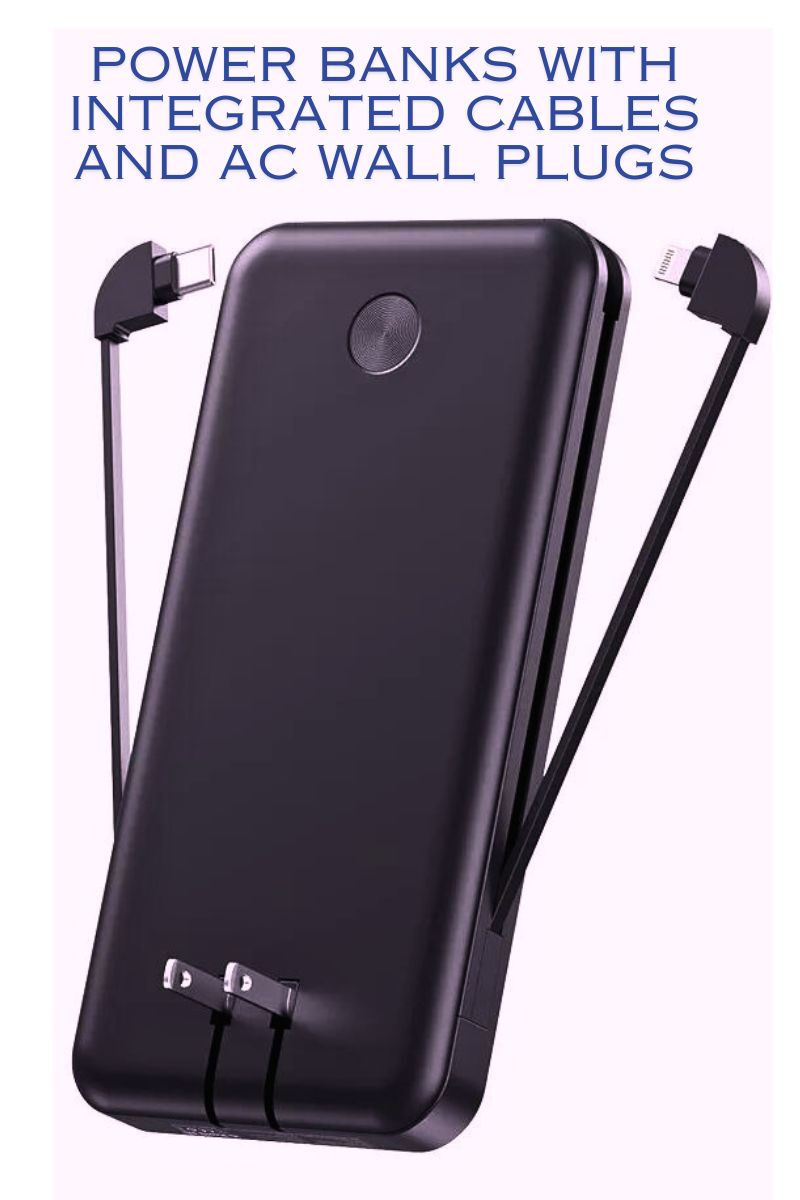
While mAh is critical, don’t overlook other factors like the number of output ports, charging speed, and additional features like pass-through charging (the ability to charge the power bank and a device simultaneously). Some power banks also come with built-in cables or wireless charging capabilities, which can add convenience.
The Rule of Thumb:
As a general guideline, the usable capacity of a power bank is typically around two-thirds of its stated capacity. So, a 10,000mAh power bank might deliver closer to 6,660mAh of usable power. This reduction is more pronounced in lower-quality power banks, while premium models tend to be more efficient.
Why Does This Happen?
- Voltage Conversion: Power banks convert the stored energy from one voltage level to another to match your device’s requirements. This conversion process inevitably leads to some energy loss.
- Charging Inefficiency: Charging your device from the power bank isn’t 100% efficient. Some energy is lost as heat during the charging process.
Choosing the Right Power Bank:
When selecting a power bank, keep in mind that its actual capacity will be lower than advertised. Consider your device’s battery capacity and usage patterns to determine the appropriate power bank capacity for your needs.
FAQs
What is the difference between an AH and a MAH battery?
The terms “Ah” (Ampere-hour) and “mAh” (Milliampere-hour) both measure a battery’s capacity, but they represent different scales. An Ampere-hour (Ah) is a unit that represents the charge a battery can deliver over one hour, whereas a Milliampere-hour (mAh) is simply a smaller unit, where 1 Ah equals 1,000 mAh.
Does more mAh mean more battery hours or battery life?
The “mAh” rating of a battery refers to its capacity, not necessarily the battery’s lifespan. A higher mAh rating indicates that the battery can provide more power over time, meaning your device can run longer before needing a recharge. However, this doesn’t equate to a longer service life for the battery.
How does mAh affect the number of charges a power bank can provide?
The mAh rating of a power bank directly impacts how many times it can recharge your device. For instance, a power bank with 10,000 mAh can theoretically charge a smartphone with a 2,500 mAh battery about four times, though real-world usage may vary due to efficiency losses and other factors.
Is a higher mAh rating always better?
Not necessarily. While a higher mAh rating means more capacity, it also usually results in a larger and heavier power bank. You should balance the need for capacity with portability based on your specific use case.
How do I calculate how many times a power bank can charge my device?
Number of charges = Capacity of power bank (mAh)/Capacity of device’s battery
It is just an estimated value. Keep in mind that factors like efficiency losses may reduce the actual number of charges slightly.
Do all power banks with the same mAh rating perform the same?
No, performance can vary due to factors like the power bank’s efficiency, output voltage, and the quality of its components. Additionally, the speed of charging and the number of output ports can also affect the overall experience.
What’s the difference between mAh and Wh (Watt-hours)?
mAh measures the capacity of the battery, while Wh (Watt-hours) measures the actual energy stored in the battery. Wh takes into account the voltage of the battery, offering a more accurate representation of the power bank’s total energy capacity. To convert mAh to Wh, you multiply mAh by the voltage (V) and then divide by 1,000.
Can I use a high-mAh power bank with any device?
Generally, yes. However, it’s important to ensure that the power bank’s output voltage and current are compatible with your device to avoid damage. Most modern power banks are designed with built-in safety features to prevent overcharging or damage to your devices.
How does usage affect the actual capacity of a power bank?
Factors like the type of device being charged, the charging cable quality, and ambient temperature can affect the actual capacity of a power bank. Devices with larger batteries or higher power demands will drain the power bank faster.
What should I consider when choosing a power bank besides mAh?
Besides mAh, consider factors like the number of output ports, charging speed, weight, size, and additional features such as pass-through charging or built-in cables. Some power banks also offer quick charge technology, which can be a significant benefit.
Does the mAh rating decrease over time?
Yes, like all batteries, a power bank’s capacity will gradually decrease with repeated charge and discharge cycles. High-quality power banks typically degrade more slowly, retaining a good portion of their capacity even after hundreds of cycles.
How does mAh relate to charging time?
mAh affects how long it will take to charge a device and how long the power bank itself will take to recharge. A power bank with a higher mAh will generally take longer to recharge, especially if charged using a lower wattage charger.
Are there any legal restrictions on power bank capacity?
Yes, particularly when flying. Many airlines restrict power banks to a maximum of 100Wh (approximately 27,000 mAh for a typical 3.7V battery). Larger capacities may require airline approval or may be prohibited altogether.

One thought on “Comparing Power Banks Capacities: What Does mAh Really Mean?”